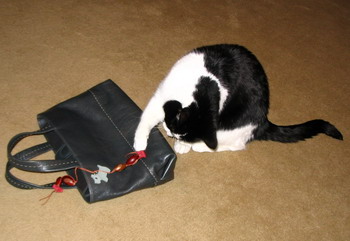
Now why is it that any time I spend more on something than is strictly necessary, Molly assumes it must be for her?
Now why is it that any time I spend more on something than is strictly necessary, Molly assumes it must be for her?
One of the things I am very bad at is preparing rotas. A member of the congregation noticed this (OK, most members of all of the congregations noticed this) and offered to prepare the rotas for me. I was wary. Part of the stress of doing it is in remembering the little things that are hidden, and I wasn’t sure I wanted to bring them to light. But I braved it out and produced a long set of instructions which included things like:
And then I set her free to juggle names, with the one last warning that she should leave all major festivals blank so that I could sort out Christmas once I knew who would be active in the Advent Carol Service.
The person did admirably, and had the grace to admit that she now understands why rotas drive me crazy.
But as I looked at the list and changed the last few reading for February since Lent had crept up sooner than usual, I remembered another reason I hate rotas.
There, on two sides of A4 was the reminder that it is not only long nights, AGMs and Advent which are fast approaching, but the marathon that is Advent-Christmas-Epiphany-Candlemas-Lent-Easter- Pentecost.
It is all one this year. The wax will hardly be set on the newly blessed candles before room fills with the smoke of burning ash. And then, at the end of it all, and endless sea of green.
Lord have mercy.
Kelvin has written very movingly of the ways the eucharist reforms us. He alluded to Dom Gregory Dix’s wonderful words, and it seemed worth quoting them in full:
Was ever another command so obeyed? For century after century, spreading slowly to every continent and country and among every race on earth, this action has been done, in every conceivable human circumstance, for every conceivable human need from infancy and before it to extreme old age and after it, from the pinnacle of earthly greatness to the refuge of fugitives in the caves and dens of the earth. Men have found no better thing than this to do for kings at their crowning and for criminals going to the scaffold; for armies in triumph or for a bride and bridegroom in a little country church; for the proclamation of a dogma or for a good crop of wheat; for the wisdom of the Parliament of a mighty nation or for a sick old woman afraid to die; for a schoolboy sitting an examination or for Columbus setting out to discover America; for the famine of whole provinces or for the soul of a dead lover; in thankfulness because my father did not die of pneumonia; for a village headman much tempted to return to fetich because the yams had failed; because the Turk was at the gates of Vienna; for the repentance of Margaret; for the settlement of a strike; for a son for a barren woman; for Captain so-and-so wounded and prisoner of war; while the lions roared in the nearby amphitheatre; on the beach at Dunkirk; while the hiss of scythes in the thick June grass came faintly through the windows of the church; tremulously, by an old monk on the fiftieth anniversary of his vows; furtively, by an exiled bishop who had hewn timber all day in a prison camp near Murmansk; gorgeously, for the canonisation of S. Joan of Arc—one could fill many pages with the reasons why men have done this, and not tell a hundredth part of them. And best of all, week by week and month by month, on a hundred thousand successive Sundays, faithfully, unfailingly, across all the parishes of Christendom, the pastors have done this just to make the plebs sancta Dei—the holy common people of God.
Dom Gregory Dix, The Shape of the Liturgy

 wonderful exchange